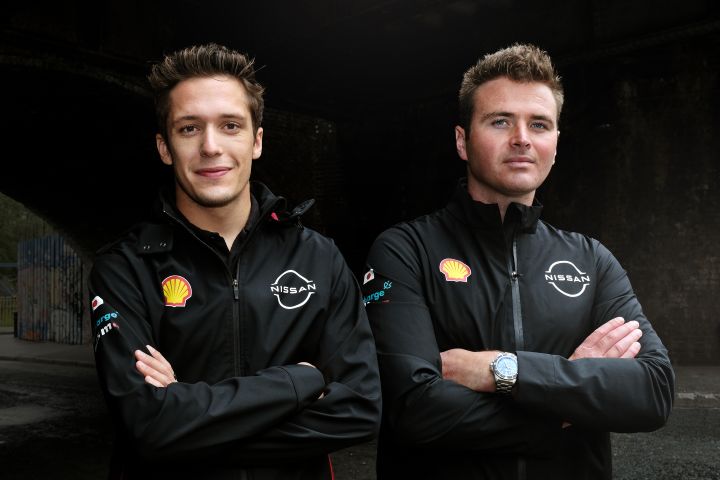
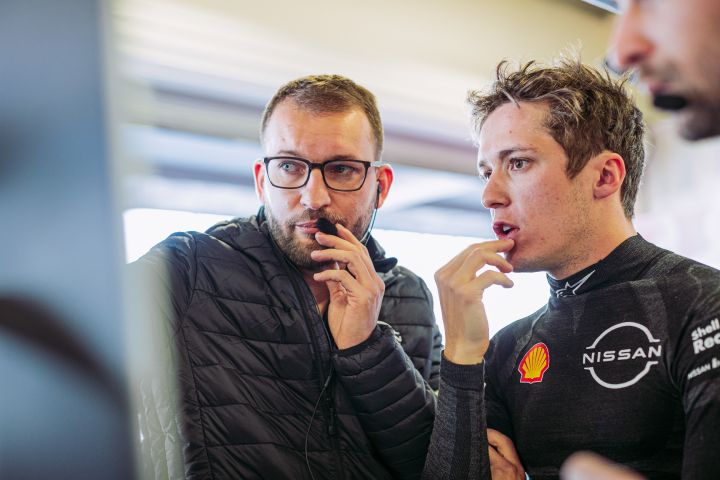
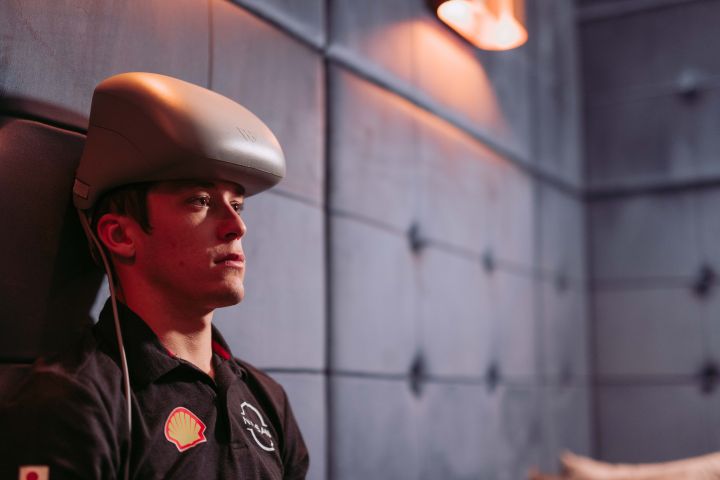
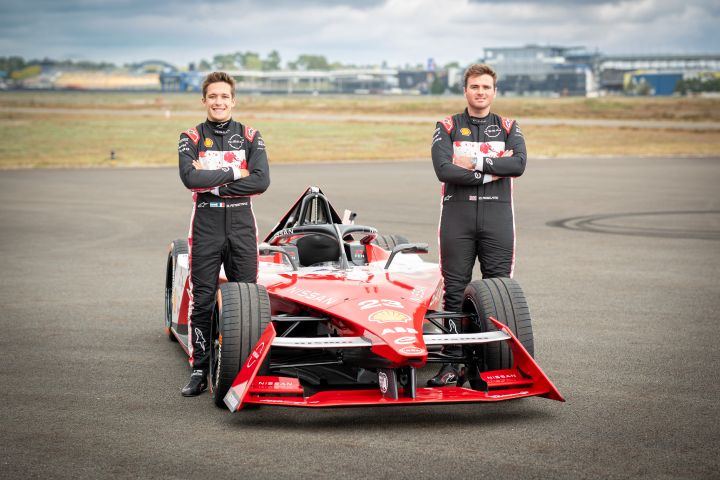
Nissan made its all-electric racing debut in Season 5 (2018/19) of the ABB FIA Formula E World Championship, becoming the first and only Japanese manufacturer to enter the series and competing in partnership with the e.dams race team as Nissan e.dams.
After committing to the Gen3 era in 2021, Nissan took full control of the team in early 2022 in preparation for Season 9. Entering the championship for the first time as a single entity, the outfit made its maiden appearance under the Nissan Formula E Team name.
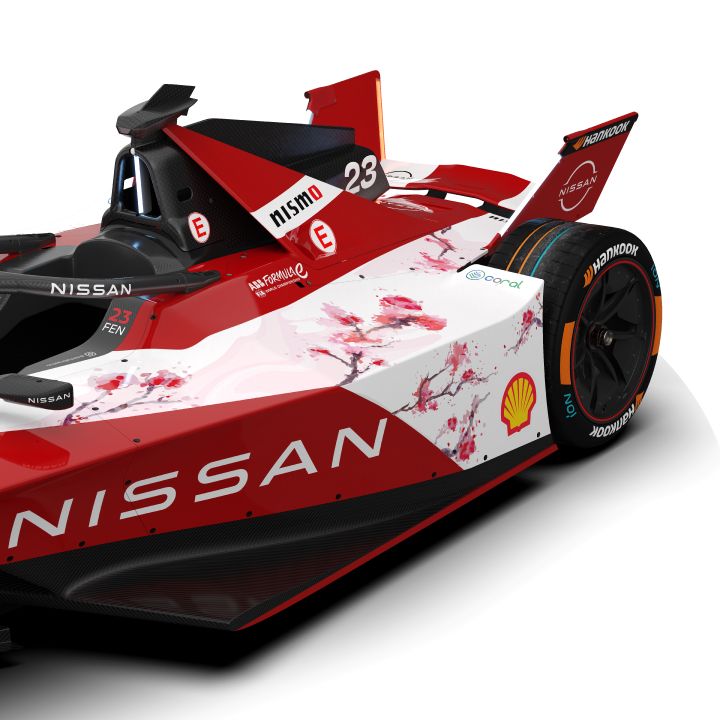
Sporting a bold livery featuring a cherry blossom pattern to represent both the team's Japanese heritage and as a symbol of its new beginning in the sport, the squad showed improved pace on previous seasons. Highlights included securing pole position in Cape Town and a podium finish in Rome, while regularly fighting at the front of the field.
After an encouraging maiden Gen3 campaign, Nissan Formula E Team is looking to build on its performance in Season 10. The squad is also set to move its headquarters from Le Mans to the Paris area, highlighting the manufacturer's firm commitment to the series and to pushing the boundaries of electric vehicle technology.
The state-of-the-art facility and brand-new workshop are part of Nissan's overall plan for the Formula E team. The move also strategically places the outfit in the Paris area, to be close to other Renault-Nissan-Mitsubishi Alliance facilities and benefit from them.
Tommaso Volpe, managing director and team principal, Nissan Formula E Team, commented: "Following a positive end of the first season of the Gen3 era for Nissan Formula E Team, we're looking to continue building our momentum during Season 10 and become more regular frontrunners. The 2022/23 campaign was a huge moment for the squad, with several internal changes along with the new regulations. This year is going to be another important one for us as we look to keep developing and improving. We have a strong driver line-up and will look to attack from the off in Mexico City."
Formula E Overview
The ABB FIA Formula E World Championship is an all-electric racing series that takes place on specially constructed city center street circuits around the world. In some instances, the championship also races on permanent motorsport circuits. The races are called E-Prix.
Teams
For the 2023/24 season, the FIA Formula E World Championship is made up of 11 teams, all with two cars and drivers. 22 cars line up on the grid for each race. Nissan races alongside some of the world's biggest automotive brands. Many of the teams, like Nissan, have a rich and successful history in motorsport.
Calendar
- Pre-season testing – Valencia, Spain – 23-27 Oct 2023
- R1 – Mexico City, Mexico – 13 Jan 2024
- R2 – Diriyah, Saudi Arabia – 26 Jan 2024
- R3 – Diriyah, Saudi Arabia – 27 Jan 2024
- R4 – Hyderabad, India – 10 Feb 2024
- R5 – Sao Paulo, Brazil – 16 Mar 2024
- R6 – Tokyo, Japan – 30 Mar 2024
- R7 – Misano Adriatico, Italy – 13 Apr 2024
- R8 – Misano Adriatico, Italy – 14 Apr 2024
- R9 – Monte-Carlo, Monaco – 27 April 2024
- R10 – Berlin, Germany – 11 May 2024
- R11 – Berlin, Germany – 12 May 2024
- R12 – Shanghai, China – 25 May 2024
- R13 – Shanghai, China – 26 May 2024
- R14 – Portland, USA – 29 Jun 2024
- R15 – Portland, USA – 30 Jun 2024
- R16– London, United Kingdom – 20 Jul 2024
- R17 – London, United Kingdom – 21 Jul 2024
Championship and standings
The ABB FIA Formula E World Championship consists of two separate titles - one dedicated to the drivers and another to the teams. The Drivers' World Championship is awarded to whichever driver has accumulated the most points over the season. The Teams' World Championship is decided by the combined score of each team's driver line-up throughout the campaign.
Points system
Formula E follows a standard points system, used in other FIA-sanctioned series - awarding points to the top-10 finishers.
- 1st - 25pts
- 2nd - 18pts
- 3rd - 15pts
- 4th - 12pts
- 5th - 10pts
- 6th - 8pts
- 7th - 6pts
- 8th - 4pts
- 9th - 2pts
- 10th - 1pt
Additional points are also awarded for securing Julius Baer Pole Position and clinching the TAG Heuer Fastest Lap in the race.
The driver starting at the front, from Julius Baer Pole Position, picks-up an extra three points.
During the race, the driver who completes the fastest lap also receives one additional point. However, the driver must finish in the top-10 places to gain the TAG Heuer Fastest Lap. If not, then the driver in the top-10 with the next fastest lap takes the honor.
Julius Baer Pole Position: 3 points
TAG Heuer Fastest Lap in race: 1 point (if in a top-10 finishing position)
Race day format
Practice
Each event has two practice sessions - an opening 30-minutes on a Friday, followed by a further half an hour on Saturday. This is reduced to one 30-minute session on the second day of a double-header.
This is the first time the teams and drivers will take to the track under timed conditions as they get a feel for the track and adapt to the car set-up.
Teams must field at least two rookie drivers in Free Practice 1 over the course of the season, to give up-and-coming talent a taste of top tier electric motorsport.
POWER: 350KW IS AVAILABLE THROUGHOUT.
Qualifying
Formula E's qualifying format allows the best teams and drivers to showcase their speed and skill but maintains the possibility of any driver stepping up, pulling a lap out of the bag and firing themselves up the starting grid.
The Group Stage sees two groups of 11 drivers, ordered based on their Drivers' World Championship position, battling at 300kW to set lap times in a 10-minute session, with the fastest four from each progressing into the Duels stage and the quarter-finals. The drivers who progress from each group then compete against one another in head-to-head Duels at 350kW for a place in the semi-finals. Then, the eventual quickest two drivers face-off in the final Duel.
The winning driver of the final Duel takes Julius Baer Pole Position, while the runner-up lines up second. The semi-finalists will line up third and fourth, the quarter-finalists between fifth and eighth - according to their lap times.
The fifth to 12th-placed drivers who competed in the pole sitter's group will fill the odd positions on the grid. The corresponding drivers from the other group will be classified in the even grid slots. So, if the polesitter comes from Group 1, the fifth placed driver in Group 1 will line up ninth on the starting grid and the fifth placed driver in Group 2 takes 10th and so on.
POWER: 300KW IN GROUP AND 350KW IN DUELS.
E-Prix
Races, or E-Prix, begin with a standing start, meaning the cars are stationary until the lights go out. The drivers line-up on a dummy grid - a short distance behind the actual grid - and slowly file into position to start the race. The E-Prix lasts for a predetermined number of laps.
Laps can be added for Safety Car and Full Course Yellow interruptions, with the total laps to be added announced three laps prior to the end of the E-Prix.
Introduced for the 2018/19 season was ATTACK MODE, which lets every driver pick up an extra hit of power at their own risk. To fire up ATTACK MODE, drivers will need to arm their car, drive off the racing line, and through the Activation Zone. As a reward for taking a slower line through the corner, they'll be able to collect an extra 50kW of power – 350kW from the stock race power deployment of 300kW. Drivers can choose to secure the extra speed if they want to race harder, giving them the edge to keep ahead of the competition or make moves up the pack. The time ATTACK MODE can be armed is published by the FIA pre-race.
Later in Season 10, ATTACK CHARGE, using pioneering battery and charging technology, will allow the newer, smaller, lighter Gen3 cars to receive an in-race energy boost via a pit stop – delivered at a lightning-quick 600kW. This mandatory 30-second stop will unlock two ATTACK MODE periods with the cars running at 350kW vs the stock 300kW.
Double-header
Most events take place over a single day in order to minimize disruption to the host city. Some events stretch to two days with double the amount of action - these are referred to as double-headers. The schedules are mirrored from each day, with only one 45-minute practice session on the second day.
Tires and allocation
The bespoke 18-inch treaded all-weather tires used by all teams and drivers are supplied by Hankook - official tire supplier of the FIA Formula E World Championship. Each driver can use no more than four new rear and four new front tires for each event. For a double-header, drivers are given six front and rear tires to use across the whole weekend.
Charging times
Charging the car is forbidden during both qualifying and the race, as well as throughout Parc Fermé and scrutineering. Teams can charge the cars in-between sessions and during practice.
e-License
Just like a driving license for the road - Formula E drivers must qualify to participate. In order to enter the FIA Formula E Championship, drivers must comply with the following:
- Drivers must conduct a specific FIA training session focusing on electrical safety, specific features of the fully-electric Formula E car, as well as reviewing both technical and sporting aspects of the series.
- Drivers must have accumulated at least 20 points in the past three years, in conjunction with the FIA points system - used to qualify for a Super License. Or, to have previously been holding a Super License, or to have participated in at least three events of the previous FIA Formula E World Championship.
- The champion from the previous season automatically qualifies for a Super License the following year.
If these points aren't met - a driver judged by the FIA to have consistently demonstrated outstanding ability in single-seater categories, but with little or no opportunity to qualify, can still participate.
# # #