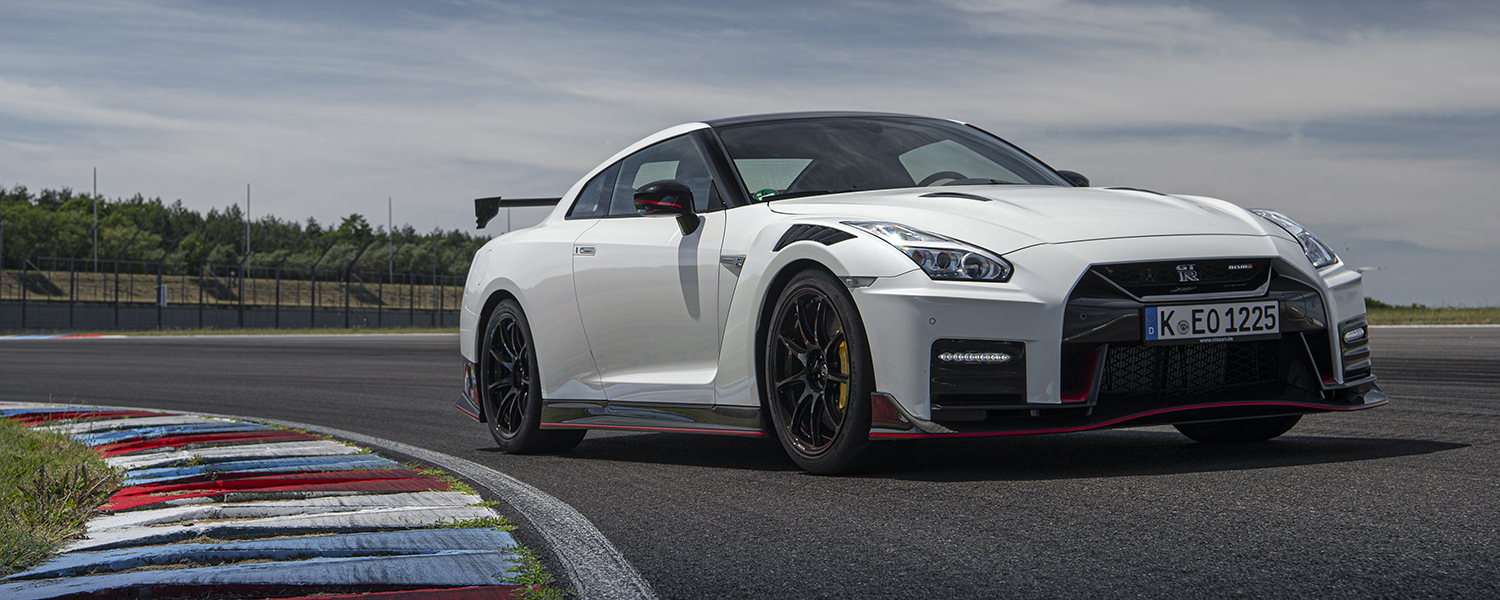
2020 Nissan GT‑R draws on 50 years of GT‑R racing history to perfect the ultimate performance machine
Few vehicles in the world can be instantly identified by just three letters. But to motoring enthusiasts everywhere, "GT‑R" has become synonymous with excitement, high performance and unparalleled refinement. Making its world debut at the 2019 New York International Auto Show, the 2020 Nissan GT‑R 50th Anniversary Edition takes the nameplate to a level that was unimaginable when it was first introduced 50 years ago.
To celebrate the half-century of the GT‑R, engineers challenged themselves to find undiscovered performance potential while still making sure the car can be enjoyed by drivers at any level. "A GT‑R is about total balance management," said Hiroshi Tamura, chief product specialist for the GT‑R. "It is not about chasing a power figures, but creating a new GT‑R, where no aspect has been overlooked. This is appropriate to celebrate the GT‑R 50th anniversary."
A 50th Anniversary Celebration
The 2020 Nissan GT‑R is available in three trim levels: GT‑R Premium, GT‑R Track Edition and GT‑R NISMO (or full information on the GT‑R Track and GT‑R NISMO grades, please visit NissanNews.com). It is the 50th Anniversary Edition (based on the GT‑R Premium), however, that truly celebrates the GT‑R's rich heritage.
The special GT‑R 50th Anniversary Edition is offered in three heritage-era, two-tone exterior color combinations meant to represent the GT‑R's liveries from the Japan GP series – of which the original GT‑R was born to dominate in. Retired since the GT‑R "R34" model, Bayside (Wangan) Blue makes a return, complete with white racing stripes. A four-coat, double-heat treatment process ensures a vivid blue with striking highlights and deep shadows. Blue accents on the wheel spokes are among several fine touches made to celebrate the GT‑R's milestone. Pearl White with red stripes and Super Silver with white stripes round out the 50th Anniversary liveries.
Inside the 50th Anniversary Edition is a special gray interior color scheme, which gives the cabin a sense of luxury, reminiscent of the atmosphere of the night sky after the twilight hour (the color is also available on select other 2020 GT‑R models). Additional 50th anniversary features include unique steering wheel and shift knob trim, special embossed seats, an Alcantara® headliner with unique stitching, Alcantara®-wrapped sunvisors, and more.
"The Nissan GT‑R has been the icon of our company's driving performance for the past half century," said Shinichiro Irie, program design director for the GT‑R. "We were highly motivated to ensure that the GT‑R 50th Anniversary Edition stands out. While the exterior and interior changes may seem subtle at first glance, they're still impactful, especially with the new paint schemes, keeping the car's lines and overall presence modern and edgy."
Upgraded performance, born from racing
While many believed that the refinement and performance of the GT‑R's 565-horsepower 3.8-liter V6 24-valve twin-turbocharged engine – each handcrafted by its own takumi technician – were so high that there was no room for improvement, the car's engineers had a few tricks up their sleeves. Among them was incorporating new turbochargers, which help increase the engine's low rpm response due to an abradable seal, providing tighter clearances and a 5% increase in efficiency. Overall, they provide even sharper engine response in and out of corners, making the driving experience more rewarding and richer than ever before.
The exhaust manifolds, inspired by racing technology, have optimized turbo flange attachment points, which allow for easier servicing and potential tuning, without touching the exhaust manifold. In addition to the engine's 565 horsepower at 6800 rpm, torque is rated at 467 lb-ft at 3,300 – 5,800 rpm.
The standard titanium exhaust system better manages the high temperatures of the exhaust gases from the engine (versus non-titanium). The system includes a duct on the vehicle's undertray just forward of the muffler, which guides air into the rear diffuser section to help cool the muffler and evacuate hot air.
Engine power is transferred to all four of the GT‑R Premium's wheels via an independent rear transaxle, the ATTESA E-TS all-wheel drive system. During normal driving, the GT‑R behaves like a rear-drive vehicle, with the torque split set at 0:100, but it can be automatically diverted up to 50:50 depending on speed, lateral acceleration, steering angle, tire slip, road surface and yaw rate. A special GT‑R-specific yaw-rate feedback control measures the differences between the target yaw rate calculated from the steering angle and actual yaw rate detected by the yaw-rate sensor and G sensor, and adjusts the torque bias accordingly.
The 2020 GT‑R Premium also features a 6-speed dual-clutch transmission with a refined "R mode," made for both road and track. It features more aggressive downshifts to better anticipate swift cornering exits, with gear selection happening during ABS engagement, resulting in reduced understeer and a more driver-intuitive feeling. The adaptive shift control is programmed to change shift schedules to fit the user's driving style, making it possible to drive according to the law on public roads, with full brute force available on the race track, without needing to manually change shift modes (in A mode/R mode).
The GT‑R's signature exhaust note is the product of a new titanium muffler, featuring titanium finishers with burnished blue tips.
The electronically controlled suspension has been tuned to provide better cornering stability and a smoother ride. The steering is more linear and precise than ever, requiring minimal corrections at speeds of up to 186.4 mph. Braking is provided by Brembo® six piston monoblock calipers, full-floating, vented and drilled rotors in front and Brembo® four piston monoblock calipers, full-floating, vented and drilled rotors in the rear. For 2020, GT‑R Track Edition and GT‑R NISO are available with a new carbon ceramic braking system.
The GT‑R's Premium Midship Platform layout places the transmission, transfer case and final drive at the rear of the vehicle, without the use of traditional torque tubes, allowing the suspension to operate independently while optimizing weight distribution and maximizing tire grip at each corner.
The GT‑R's Bilstein® DampTronic driver-adjustable shock-absorber system – which utilizes information from multiple vehicle systems to provide appropriate damping forces and high level of control for a variety of driving situations – includes a valve housing system that reduces resistance losses. Also, rigid attachment points for the suspension system enhance cornering stability and turning response by allowing all of the wheels to be placed under even a greater load while maintaining optimal contact with the road surface.
The DampTronic system features three driver selectable settings: Normal; Comfort, for maximum suspension compliance; or R. The same three-stage adjustability is also available for the VDC system and transmission shift operation. The "R" and "Comfort" settings offer the driver enhanced sportiness and a smoother ride quality. Because of the increase in structural rigidity, the "R" mode enables the vehicle to achieve the same yaw rate with reduced steering angle for a crisper, more communicative steering response, while the "Comfort" suspension setting produces less vertical G-loading in testing when compared to the "Normal" suspension setting. Lightweight 20-inch 15-spoke forged alloy wheels by RAYS® – newly designed for 2020 – offer exceptional strength and rigidity.
The 2020 GT‑R's steering system – a speed-sensitive power rack-and-pinion design with aluminum steering rack, four-point mounting and stiff insulators – possesses sharp response during spirited driving, with reduced effort for around-the-town commutes and exceptional feedback on the open highway.
In addition, the GT‑R is designed to invigorate the senses while maintaining a quiet cabin at cruising speeds. The Active Noise Cancellation (ANC) system identifies and reduces unwanted low-frequency sounds by using strategically placed microphones within the cabin and using a sound wave at the same amplitude through noise cancellation speakers to offset unwanted sounds. Sound absorption material behind the instrument panel, an acoustic windshield, a dashboard insulator and noise insulators housed within the rear fenders have been engineered to act as countermeasures to remove undesirable noise from the engine compartment, as well as the rear tires.
Additionally, the electronic control valve housed within the titanium exhaust helps to control muffler resonance, which could otherwise create an unwanted "booming" sound from the exhaust system; ANC and the exhaust's electronic control valve essentially eliminate this issue by controlling such unwanted low frequency sound.
Also, thanks to the fitment of titanium mufflers with an electronic control valve, Active Sound Enhancement (ASE) brings the engine's power directly into the cabin. ASE defines the sound frequency and volume of specific targets (such as the exhaust note) while simultaneously comparing it to pertinent information including engine speed and other key vehicle parameters. It processes the sound signal through the audio system's amplifier, and then releases it into the passenger compartment through the speakers.
The driver can vary the sound control capability through the different vehicle mode settings – Normal, Comfort and R. Also, an exhaust sound control switch allows for a quieter engine start. By pressing the exhaust sound control switch prior to engine start, this will close the electronic valve within the exhaust system for more quiet operation at engine startup and continue for a brief time while the vehicle is driven with the engine running at low rpms. There is a 10 dB difference between having the electronic valve within the exhaust system closed and opened – a substantial difference in volumetric sound quality to the human ear.
Aggressive Exterior Design
The GT‑R's dynamic styling is both attractive and functional. The V-motion grille, one of Nissan's design signatures, features a matte chrome finish and mesh pattern. The hood, with its pronounced character lines flowing flawlessly from the grille, is reinforced to enhance stability during high speed driving. By essentially eliminating hood deformation, testing has shown that the hood design greatly improves aerodynamic performance at the front of the vehicle at high speeds.
The GT‑R's aerodynamic exterior focuses on three key areas: downforce generation, drag reduction and cooling of vital vehicle systems. The goal is to maximize cooling airflow, while at the same time keeping aerodynamic drag in check – for example, not increasing drag in one area of the vehicle as a result of improving cooling performance/airflow in another.
In addition to the grille and hood, the curving profile of the front under spoiler is slightly extended and lowered to maximize airflow at its lower edge. By carefully shaping the sill cover along the lower portions of the sides of the car, the amount of air being drawn underneath is reduced, countering vehicle lift and improving stability. The C-pillars' upper portions are shaped to deliver better airflow management by preventing the generation of a smaller vortex.
The rear of the GT‑R continues to be defined by its iconic round taillights. A silver-finish diffuser and side air vents are incorporated next to the quad titanium exhaust tips to improve the car's aerodynamics. Also, the character line that separates the lower black section from the body panel is heightened to make the car look wider and more aggressive. The result is an aerodynamically efficient overall exterior with enhanced stability at high speeds, while keeping a 0.26 drag coefficient.
In addition to the 50th Anniversary Editions' special livery colors, the 2020 GT‑R Premium is available in six exterior colors: Solid Red, Jet Black Pearl, Super Silver QuadCoat (premium color), Gun Metallic, Pearl White TriCoat (premium color), Bayside Blue QuadCoat (premium color)
A cabin worthy of GT‑R
The 2020 GT‑R Premium's superbly crafted interior delivers an unparalleled degree of comfort, luxury and everyday usability. Seamlessly wrapped in one continuous hide of the highest quality Nappa leather, the instrument panel adopts a "horizontal flow" to deliver a sense of high stability for the car's front-seat occupants, while the line from the instrument cluster to the center console provides a distinct driver-oriented environment for those behind the steering wheel. The 8.0-inch touch panel monitor features large icons on the display screen to allow the user to easily manage the audio system, navigation system, telephone controls and other infotainment functions.
In keeping with the all-out performance targets for the GT‑R, the seats' layer of cushioned material found beneath the leather appointments is a thin material to help keep overall weight down, while still providing the highest quality of texture. The driver and front passenger seatbacks for the Pure and Premium models are engineered to provide a premium ride experience and ample torso support, resulting in less slippage during spirited driving and reduced fatigue on long commutes. By configuring the support wires within the seatback frame, the engineering team was able to reduce the weight of each seatback while simultaneously reducing pressure points upon the torso of both the driver and front passenger for a more relaxed seating position.
The leather itself is artfully stitched together throughout the cabin by a master craftsman. Steering wheel-mounted paddle shifters allow drivers to make mid-turn gear changes without taking their hands off the wheel. The interior features leather-appointed seating (Pure) and available semi-aniline leather appointments, and four different color options: Black, Amber Red and Rakuda Tan, as well as the premium black "Kuro Night."
Standard on all 2020 GT‑R models is NissanConnect® with Navigation and Services featuring Apple CarPlay™, with 8.0-inch color display with multi-touch control, Nissan Voice Recognition for navigation and audio, HD Radio, SiriusXM® Satellite Radio, SiriusXM® Traffic, SiriusXM® Travel LinkÔ (weather, fuel prices, movie listings, stock info and sports) (SiriusXM® subscription required, sold separately), Bluetooth® Hands-free Phone System, Streaming audio via Bluetooth®, Hands-free Text Messaging Assistant, NissanConnect Mobile Apps and NissanConnect Services Powered by SiriusXM® (SiriusXM® subscription required, sold separately). A Display Command control on the carbon-fiber center console allows easy operation without having to touch the monitor.
Other convenient information features include an innovative multi-function meter that allows the driver to customize the layout of important vehicle-specific performance parameters/information, such as coolant temperature, engine oil temperature, engine oil pressure, transmission oil temperature, transmission oil pressure and turbocharger boost pressure. The GT‑R's steering wheel-mounted shift paddles allow drivers to change gears mid-turn without taking their hands off the wheel.
Standard safety equipment includes a Nissan Advanced Air Bag System for driver and front passenger, front seat-mounted side-impact supplemental air bags for driver and front-passenger and standard roof-mounted curtain side-impact supplemental air bags for front seat occupant head protection – along with front seat belts with pretensioners and load limiters and three-point ELR/ALR rear seat belts.
Other technologies include Advanced Vehicle Dynamic Control (VDC) stability control system with three driver-selectable modes (Normal, R-Mode, Off), Electronic Traction Control System (TCS), Anti-Lock Braking System (ABS) and Electronic Brake force Distribution (EBD), RearView Monitor, Tire Pressure Monitoring System (TPMS) and automatic on/off headlights.
Models and Options
The 2020 Nissan GT‑R is available in Premium, Track Edition and NISMO models (for details on the full GT‑R lineup, please visit NissanNews.com).
The full list of 50th Anniversary Edition equipment, in addition to the exterior two-tone paint, includes unique exterior badge on rear; anniversary logo in meter cluster; unique 50th Anniversary steering wheel; Alcantara® headliner with unique stitching; Alcantara® sun visors; unique 50th Anniversary shift knob; exclusive seat/trim color and contrasting stitching; 50th Anniversary logo embroidery on front seats; unique 50th Anniversary interior badges; and 50th Anniversary kickplates. The Bayside Blue exterior also includes unique blue wheel coloring.
Two other options are available with the 2020 Premium: an All Weather Package, which includes Dunlop® all-season tires and unique coolant/water ratio; and the Premium Interior Package, with hand-stitched semi-aniline leather "Kuro Night" interior appointments.
# # #
2020 Nissan GT‑R NISMO – ultimate performance available to select drivers
Nissan reaffirms why NISMO + GT‑R = exhilarating performance
Designed for a pro, built for everyone. The 2020 Nissan GT‑R NISMO is the culmination of two of Nissan's most important nameplates: GT‑R and NISMO. The GT‑R nameplate represents 50 years of history, pedigree, success in racing and a global fan following. NISMO, its name derived from NISsan MOtorsports International Co., is known worldwide as Nissan's in-house tuning arm that pursues performance at a maniacal level by perfecting the smallest of details. True to its proud heritage, the GT‑R NISMO is a more extreme, track-oriented version of the GT‑R that has matured through rigorous refinements – becoming sharper and more rewarding as a street car.
For 2020, the GT‑R NISMO is about total balance. New race-proven turbochargers, improved gearbox shift control, lighter components, reduced overall mass and upgrades to the brakes, wheels and tires contribute to a 2.5-second reduction in lap time around Nissan's development track. There's also an improvement of the GT‑R's inherent high-speed stability, even at speeds of up to 186 mph. Here is how Nissan achieved this remarkable improvement.
Building on the kaizen mindset
The pursuit of perfection requires persistence. The constant need to evolve and fine-tune – this is kaizen. Kaizen is at the heart of the 2020 GT‑R NISMO, a team-wide mindset that has pushed the men and women behind this car to challenge themselves each step of the way. They show an inherent curiosity and "what if" mentality when revisiting every minute detail.
Small improvements may not seem important in isolation, but it's when they're combined as a whole that a difference becomes perceptible. That's when a car's character grows; it's not all about numbers and performance but the holistic effect – how the GT‑R NISMO becomes an extension of a driver's body and mind as the vehicle carves a line through a favorite road or race track.
Lead by Tamura, executed by the team
Chief Product Specialist Hiroshi Tamura – known as "Mr. GT‑R" – has been at Nissan for more than 30 years. Dedicated to evolving and improving the GT‑R, he has been part of almost every step of the model's evolution, cutting his teeth as a chassis engineer and part of the team that created the BNR32 Skyline GT‑R in 1989.
Tamura's love for Nissan's most legendary sports car was sparked early. At age 10, he witnessed Takahashi Kunimitsu take his blue-and-white 2000 Skyline GT‑R racecar to an epic finish at a very wet Fuji Speedway, beating strong rivals like Mazda and its RX3. Tamura knew from that moment that he wanted to not just watch the GT‑R but also be part of its success.
Today, Tamura ensures the GT‑R continues to evolve year in and year out, staying atop a growing field of competitors, including the most expensive crop of supercars – and, in some cases, hypercars.
GT3 turbos for the 600-horsepower VR38DETT V6
Racing improves the breed and that is very much the case with the 2020 GT‑R NISMO and its legendary 3.8-liter V6 VR38DETT engine. As with all GT‑R models, each GT‑R NISMO engine is hand-assembled from beginning to end in a special clean room by meticulously trained technicians, with an aluminum plate added to the front of each engine showing the name of the individual Takumi engine craftsman. For 2020, the hand-assembled engines feature a long menu of enhancements, starting with twin-turbocharger heart.
The 2020 GT‑R's new turbochargers are the same ones currently used on the GT3 race car version of the GT‑R. They employ a 10-vane turbine wheel (one fewer vane than the 2019 model) and the vanes are 0.3 millimeters thinner. This accounts for a 14.5% reduction in mass, and therefore inertia by 24%, allowing for faster response. To counteract having one less vane, which would normally reduce flow rate, a new backplate was created to prevent exhaust gases from flowing behind the turbine blades, drastically improving flow efficiency. Through the latest fluid and stress analysis, special attention was given to the actual design and profile of the vanes. Their new shape optimizes efficiency with exhaust gases to boost flow rate resulting in improved boost response and acceleration as well as in gear "pickup" in any situation.
For example, when accelerating from 68 mph and 4,000 rpm in fourth gear (manual mode), the response is immediate and instantly felt – showing an engine response improvement of 20% (versus the previous GT‑R NISMO) as the driver increases throttle pressure, from 0% opening to wide open throttle. The result is a sharper feeling that further enhances the overall character of the engine.
For 2020, the engine is rated at 600 horsepower and 481 lb-ft of torque. The new engine is also utilized for the first time in the 2020 GT‑R Track Edition, which previously used the milder-tuned 565-horsepower version.
A revised titanium exhaust system has been adapted for 2020 with a more emphatic – yet not intrusive – tone coming through to the cabin. Handcrafted burnished tips are a signature touch of the lightweight system.
The 2020 GT‑R NISMO's revised 6-speed dual-clutch transmission features a refined "R mode" that now shifts gears more aggressively and intuitively, thanks to a new algorithm for the adaptive shift control (ASC). This selects the best gear for any driving scenario and can especially be felt during braking and approach into a corner, where the driveline feels more precise with faster downshift reactions to help reduce understeer on entry. With engine speed kept at a higher rate (thanks to lower gear engagement), acceleration also improves when powering out of a corner.
Aerodynamics, design and hefty dose of carbon fiber
With aerodynamic gains in mind, the design of the 2020 GT‑R NISMO has undertaken an evolution. The changes are completely functional, increasing cooling of key areas such as the engine bay and brakes, all without negatively affecting the drag coefficient value of 0.26.
Further setting the most potent and exclusive of all GT-Rs apart from the rest is the amount of carbon fiber found throughout the car. Most components are lighter compared to the current model. This includes the front and rear bumpers, front fenders (-10 pounds), hood (-4.4 pounds), roof (-8.8 pounds), side sill covers, trunk and rear spoiler. Following the theme of kaizen, each component has been improved to cut weight, increase downforce and enhance aerodynamics. Combined, these exterior parts alone have resulted in a total weight saving of 23 pounds, joining the nearly 44-pound reduction through upgrades and new components.
The most significant piece of carbon fiber application is the roof. New for 2020, the carbon fiber roof removes a substantial amount of weight where it counts most, lowering the car's center of gravity for improved handling and feel. The roof panel itself is made by using a world-first technique of combining a Prepreg Compression Molding process with a carbon plate and lightweight hard foam sandwich structure. This gives the carbon structure a tighter and lighter weave, improving sound insulation and a striking appearance. Other changes in the carbon fiber construction are the NACA ducts on the hood, which are now incorporated into the composite structure.
The GT3 GT‑R racecar heavily inspired the design of the new front fenders. They now sport louvers that increase front downforce by 15 pound-force without creating additional drag. The wind tunnel-tested vented fenders also help smooth airflow along the rest of the body and avoid creating turbulence at the rear wing, promoting even greater high-speed stability. As a multi-functional feature, they also help funnel hot pressurized air out and away from the engine bay.
Color choices for the MY2020 Nissan GT‑R NISMO include Solid Red, Jet Black Pearl, Super Silver QuadCoat and Pearl White Tricoat. All color schemes feature black side mirrors that differentiate the car from other GT‑R models.
The brakes: Brembo calipers meet carbon ceramic rotors
Nissan collaborated with Italian brake manufacturer Brembo to create an all-new brake package for the 2020 GT‑R NISMO. Special large calipers join carbon ceramic rotors, the biggest ever fitted to a Japanese performance car at 16.1 inches in the front and 15.3 inches at the rear.
The six-piston front and four-piston rear calipers are exceptionally rigid. Their all-new construction brings a significant improvement to brake reaction time. This delivers a more responsive and progressive brake pedal, full of feedback to allow precise modulation of braking force. The result is the ability to shed speed quicker and more effectively while staying resistant to fade.
The biggest advantage comes from the carbon and silicon carbide structure of the rotors themselves. They allow for a 36-pound total drop in unsprung weight. Mounted on floating aluminum billet center bells, the new rotor and oversized caliper setup is finished off by new, specially formulated brake pads that generate higher friction levels across the full operational range. The pads also give a firmer, more reassuring pedal feel.
Front rotor cooling has also been improved by altering the angle in which the air guides are mounted, helping funnel a higher flow of air toward their centers. As a final touch, the calipers have been dipped in a heat-resistant yellow paint that is not only able to endure temperatures over 1,800 degrees Fahrenheit but is resistant to discoloring from hard use and repeated temperature cycling.
Handling, grip and steering redefined
The 2020 GT‑R NISMO's suspension tuning improves cornering stability (lateral G), with enhanced yaw-rate response and smoother ride quality. The steering features better linearity and precision than ever, requiring minimal corrections even at speeds reaching 186 mph.
The exclusive 20-inch RAYS forged aluminum wheels are a combined 0.22 pounds lighter and incorporate a new nine-spoke design that enhances rigidity despite the weight reduction. A diamond-cut white-and-red NISMO logo on the rim marks their exclusivity.
The newly designed Dunlop tires feature a new rubber compound, boosting grip by 7%, and a tread pattern with one fewer groove for the fronts, which increases the contact patch by 11%. The tire's shoulder shape is slightly rounder so that when the car leans during cornering, more rubber surface makes contact with the ground, generating more grip. Overall, tire cornering force is up by 5%. This also improves the steering response in terms of straight-line tracking and stability compared with the current model, without impacting rolling resistance performance.
The car's Bilstein DampTronic shocks were carefully retuned in both rebound (20% softer) and compression (5% softer) to take into account the overall near 66-pound reduction in weight. The revised spring rates contribute to a more linear steering response and increase in road-holding ability.
Further building on the kaizen mentality, more attention to detail continues right down to the chassis and its construction. A special type of bonding between the welds on the chassis and body results in a sturdier-feeling chassis, more composure over imperfections and more precision through all controls when pushing the car hard.
Hip-hugging comfort inside
Inside the cabin, unique to GT‑R NISMO are the leather-appointed Recaro® seats with red synthetic suede inserts. Ergonomically sculpted, heated, reclining RECARO® seats comfortably, yet firmly, support the driver and front-seat passenger. Interior trim features include discreet red stitching on the seats, center console, door trim and steering wheel.
NISMO racers influenced the design of the dark gray with red stripe steering wheel, with three spokes, red center mark and red stitching to give a strong combination of grip, feedback and comfort. A large 8-inch touch-panel monitor featuring large icons on the display screen make it simple to use, while a Display Command control on the carbon fiber center console allows easy operation without having to touch the monitor.
As with all 2020 GT‑R models, the GT‑R NISMO's instrument panel is dominated by a video game-inspired, multi-function display that was created in collaboration with Polyphony Digital, makers of the Gran Turismo electronic game. Standard features include NissanConnect® with Navigation and Services featuring Apple CarPlay®, an 8.0-inch color display with multi-touch control, Nissan Voice Recognition for navigation and audio, HD Radio, and a specially designed, 11-speaker Bose® audio system.
Only one interior color combination is available, a NISMO-specific black leather with red accents. The seat inserts are Red Synthetic Suede, and there is Dark Gray Alcantara on the steering wheel, instrument panel and headliner.
# # #
2020 Nissan GT‑R Track Edition raises the performance bar with new 600-horsepower GT‑R NISMO engine, carbon fiber roof and available carbon ceramic braking system
For those inclined to take their GT‑R to a race circuit1, Nissan offers the revised and very potent 2020 GT‑R Track Edition – which comes with a carbon fiber roof that sports a clean, tight weave made possible by a new construction process2.
While in previous years the GT‑R Track Edition featured the 565-horsepower 3.8-liter V6 24-valve twin-turbocharged engine from the GT‑R Premium grade, for 2020 the engine is borrowed from the famed GT‑R NISMO and offers a full 600 horsepower and 481 lb-ft of torque3. At the heart of the new engine are newly redesigned turbochargers from the latest GT3 series GT‑R race car. This results in a 20% increase in pedal-down acceleration reaction time.
As in previous years, the GT‑R Track Edition's performance features start under the skin with additional adhesive bonding (in addition to spot welding), which helps increase body shell rigidity versus the GT‑R Premium model. The NISMO-tuned 4-wheel independent suspension receives unique NISMO tuning, with reduced weight and additional roll stiffness (versus GT‑R Premium). Other standard equipment includes GT‑R NISMO front fenders, wide 20-inch NISMO forged aluminum-alloy wheels with NISMO-spec tires and dry carbon-fiber rear spoiler1. Inside, the Track Edition interior includes a unique red and black color treatment with high-grip, motorsports-inspired Recaro® seats.
Aggressive Design
The 2020 GT‑R Track Edition exterior features a large, distinctive grille that is designed to increase airflow to cool the engine without creating additional drag. The refined shape blends smoothly with the structurally rigid hood. By essentially eliminating hood deformation, testing has shown that the hood design greatly improves aerodynamic performance at the front of the vehicle at high speeds. The GT‑R Track Edition departs from the GT‑R Premium model by incorporating the GT‑R NISMO's wide front fenders.
In the rear, all GT‑R models continue to be defined by the iconic round taillights. A silver-finish diffuser and side air vents are incorporated next to the quad titanium exhaust tips to improve the car's aerodynamics. The character line that separates the lower black section from the body panel helps make the car look wider and more aggressive.
The rear bumper section is designed to precisely route air at the lower portion of the rear of the vehicle, creating less interference between the exhaust gases exiting the tailpipes and airflow along the rear side portions of the bumper for improved heat evacuation. The coefficient of drag is 0.26. New design NISMO 20-inch 6-spoke forged alloy wheels with black finish offer light weight (0.5-inch wider in front than Premium model), strength and rigidity and are finished off with NISMO-spec nitrogen-filled Dunlop® Sports Maxx GT600 ultra high performance run-flat tires.
The 2020 GT‑R Track Edition is available in just three exterior colors: Solid Red, Jet Black Pearl and Pearl White TriCoat (premium color).
The GT‑R Track Edition's sporty red and black interior treatment delivers an unparalleled degree of comfort, luxury and everyday usability. The dashboard adopts a "horizontal flow" to deliver a sense of high stability for the car's front-seat occupants, while the line from the instrument cluster to the center console provides a distinct driver-oriented environment for those behind the steering wheel. Ergonomically sculpted, heated, reclining and leather-appointed RECARO® front seats are standard on the GT‑R Track Edition.
Every 2020 GT‑R comes with standard NissanConnect® with Navigation and Services featuring Apple CarPlay®, with 8.0-inch color display with multi-touch control, Nissan Voice Recognition for navigation and audio, HD Radio, SiriusXM® Satellite Radio, SiriusXM® Traffic, SiriusXM® Travel LinkÔ (SiriusXM® subscription required, sold separately), Bluetooth® Hands-free Phone System, Streaming audio via Bluetooth®, Hands-free Text Messaging Assistant, and NissanConnect Services Powered by SiriusXM® (SiriusXM® subscription required, sold separately). A Display Command control on the carbon-fiber center console allows easy operation without having to touch the monitor.
Other convenient information features include an innovative multi-function meter that allows the driver to customize the layout of important vehicle-specific performance parameters/information, such as coolant temperature, engine oil temperature, engine oil pressure, transmission oil temperature, transmission oil pressure and turbocharger boost pressure.
The GT‑R Track Edition's standard shift paddles are mounted to the steering wheel, allowing drivers to change gears mid-turn without taking their hands off the wheel.
New 600-Horsepower Twin-Turbo 3.8-liter V6
The 2020 GT‑R Track Edition's VR38DETT 3.8-liter twin turbo V6 remains the heart of the GT‑R's drivetrain and is rated at 600 horsepower and 481 lb-ft of torque3. Each is handcrafted by its own takumi technician. For 2020, the GT‑R NISMO features an exclusive turbocharger design – direct from the GT‑R GT3 race car - with a modified turbine shape and fewer blades. This optimizes the flow rate and enhances the acceleration response by 20%, without a loss of horsepower. The car's exhaust note is the product of a revised titanium exhaust with handcrafted burnished blue tips.
Dubbed the "VR38DETT," the engine features plasma-sprayed bores (versus cast iron liners) for reduced friction and weight, enhanced cooling, superior power output and increased fuel efficiency. It also boasts a symmetrical independent intake and exhaust manifold system with twin high-performance turbochargers; a secondary air management system for improved cold-start emissions performance; a thermostatically controlled oil-cooling system; an oil scavenger pump to maintain oil flowing to the turbochargers; and a lateral wet and dry sump oiling system.
Each engine is hand-assembled from beginning to end in a special clean room by highly skilled technicians. An aluminum plate is added to the front of each engine showing the name of the Takumi engine craftsman.
Engine power is transferred to all four of the GT‑R's wheels via an independent rear transaxle, the ATTESA E-TS all-wheel drive system. During normal driving, the GT‑R behaves like a rear-drive vehicle, with the torque split set at 0:100, but it can be automatically diverted up to 50:50 depending on speed, lateral acceleration, steering angle, tire slip, road surface and yaw rate. A special GT‑R-specific yaw-rate feedback control measures the differences between the target yaw rate calculated from the steering angle and actual yaw rate detected by the yaw-rate sensor and G sensor, and adjusts the torque bias accordingly.
The GT‑R's Premium Midship Platform layout places the transmission, transfer case and final drive at the rear of the vehicle, without the use of traditional torque tubes, allowing the suspension to operate independently while optimizing weight distribution and maximizing tire grip at each corner.
The GT‑R Track Edition's NISMO-tuned suspension provides stunning agility, road holding and handling finesse, without compromising refinement. The springs and custom-developed Bilstein DampTronic dampers in the front and rear suspension are specially tuned to deliver exceptional grip levels and progressive handling response at the limit. Three suspension modes can be selected: Comfort, Normal and R, for circuit applications. Specially developed links fitted to the front double wishbone suspension increase castor trail to optimize wheel position during high-G cornering and improve straight-line and cornering stability.
Additionally, large high-rigidity bolts are used to increase stiffness of the wheel-hub attachment area. To minimize body-roll during cornering and changes of direction, the GT‑R Track Edition features a 17.3 mm hollow rear anti-roll bar (versus 15.9 mm for Premium model), which raises roll stiffness while reducing weight.
Like the GT‑R NISMO, the GT‑R Track Edition offers additional rigidity in the body shell (versus the GT‑R Premium) – achieved through using adhesive bonding in addition to spot welding, leading to precise suspension response under extreme load – another NISMO "factory tuned" enhancement.
The GT‑R Track Edition's DampTronic system features three driver selectable settings: Normal; Comfort, for maximum suspension compliance; or R. The same three-stage adjustability is also available for the VDC system and transmission shift operation.
Stopping power is provided by Brembo® monoblock six-piston front and four-piston rear calipers with 15.35-inch front and 15.0-inch rear Brembo® full-floating, cross-drilled two-piece rotors and low-steel, high-stiffness brake pads that minimize fade and help provide intense stopping performance. The calipers utilize race car-style radial mounting to minimize caliper flex during extreme braking.
The absolute performance theme is also fittingly reflected by the availability of a carbon ceramic brake system (found standard on GT‑R NISMO). The combination of the Brembo carbon ceramic rotors — enlarged to 16.1 inches up front and 15.3 at the rear — and Brembo calipers significantly improve reaction time, durability and overall stopping performance. The Carbon Ceramic Brake package is the only option offered with the 2020 GT‑R Track Edition.
The standard Active Noise Cancellation (ANC) system identifies and reduces unwanted low-frequency sounds by using strategically placed microphones within the cabin and using a sound wave at the same amplitude through noise cancellation speakers to offset unwanted sounds. Improved sound absorption material behind the instrument panel, an acoustic windshield, a dashboard insulator and noise insulators housed within the rear fenders have been engineered to act as countermeasures to remove undesirable noise from both the engine compartment as well as the rear tires.
Additionally, the electronic control valve housed within the titanium exhaust helps to control muffler resonance, which could otherwise create an unwanted "booming" sound from the exhaust system; ANC and the exhaust's electronic control valve essentially eliminate this issue by controlling such unwanted low frequency sound.
Active Sound Enhancement (ASE) brings the engine's power directly into the cabin. ASE defines the sound frequency and volume of specific targets (such as the exhaust note) while simultaneously comparing it to pertinent information including engine speed and other key vehicle parameters. It processes the sound signal through the audio system's amplifier, and then releases it into the passenger compartment through the speakers.
The driver can vary the sound control capability through the different vehicle mode settings – Normal, Comfort and R. Also, an exhaust sound control switch allows for a quieter engine start. By pressing the exhaust sound control switch prior to engine start, this will close the electronic valve within the exhaust system for more quiet operation at engine startup and continue for a brief time while the vehicle is driven with the engine running at low rpms. There is a 10 dB difference between having the electronic valve within the exhaust system closed and opened – a substantial difference in volumetric sound quality to the human ear.
Standard safety equipment includes a Nissan Advanced Air Bag System for driver and front passenger, front seat-mounted side-impact supplemental air bags for driver and front-passenger and standard roof-mounted curtain side-impact supplemental air bags for front seat occupant head protection – along with front seat belts with pretensioners and load limiters and three-point ELR/ALR rear seat belts.
Other standard safety and convenience technologies include Advanced Vehicle Dynamic Control (VDC) stability control system with three driver-selectable modes (Normal, R-Mode, Off), Electronic Traction Control System (TCS), Anti-Lock Braking System (ABS) and Electronic Brake force Distribution (EBD), RearView Monitor, Tire Pressure Monitoring System (TPMS) and automatic on/off headlights.
The 2020 Nissan GT‑R Track Edition is available in one fully equipped model. The Nissan GT‑R is also available in Premium and NISMO models (for details, please visit NissanNews.com).
# # #
1. Damage resulting from racing, competitive driving, track and/or airstrip use not covered by warranty. See your New Vehicle Limited Warranty and Owner's Manual for proper vehicle operation and complete warranty details.
2. Dry carbon fiber requires specific maintenance. Please see Owner's Manual for details.
3. 93 octane gasoline required.